Showing posts with label Writer Mindset. Show all posts

21 September

Writing - A Job Like Any Other...


The very best advice I received many years ago was from a prolific writer, who, being Scottish, pulled no punches, and that was exactly what I needed. No romantic BS. No cuddly positive thinking on how to be a serious writer.

"Show up to work."

That was it. That was all he said. But those four words forever altered my mindset. I realized that if I truly planned on being a novelist, I had better pull up my britches and get to work. Nothing less than that mindset would do because, picture the reverse...

Boss: Where are you, Barbie? You didn't show up for work today.

Me: Uh, well, *yawn*... I got up 'n' everything, but after breakfast, I just didn't feel inspired enough to go to work. I'll come in once I feel more "creative."

Boss: Okay. Then, I don't feel inspired enough to pay you. B-bye.

You could say to me in retort that writing a book isn't work; it's your passion.

Okay, then I'd say in counter, what do you plan to do with that book? Print one copy and use is as your own personal bathroom literature? Cool, if that's the case, but...

Chances are you're writing that book in some form to distribute to the masses for some kind of equal trade, be it company/personal reputation augmentation or for pure sales. And if any of these options are true, let me welcome you to your new job... as a writer!

As with any other career in existence on this Blue Marble, at some point you have to decide to commit, and clock in for work. To look at a career any other way is to look not at a career, but a hobby. Plain and simple. Hobbies are cool, but they never pay the bills. I could wax more poetic here, but I'm taking a page from the Scottish writer's book — less BS is better.

So... rain or shine, or your dog ate your pages, or you sneezed on them from a cold, sooner or later, you need to drag your butt in front of the page and start working to create that product for trade.

Likewise, the other ditty writers know well is, "Inspiration finds you working." It's become a long held adage because it's true.

Some days, I can wake up, and feel like 4-star poo-poo, but once I drag my carcass to the keyboard, the stinky feel lifts and my writer brain engages, and in mere minutes I forget I felt like poo-poo at all. Fact.

Believe me when I say that writing requires a mind shift more than it requires anything else. Once you realize writing is a career, your perspective on the work changes, and you take your effort more seriously. In other words, you COMMIT to the endeavor. A waffler, you are no more.

HOMEWORK: Let that sentence, "Show up for work" sink in, and starting today, begin to look at that book you want to complete as a product to trade to benefit your reader, and you. Once you allow your mindset to see this métier as a job commitment, your habits will follow along, too, and you as your own boss won't fire your butt.

Okay then, shall we? PUNCH THAT TIME CLOCK! We have words to weave...

06 July

Finishing Your Book - Your Second Full Time Job...

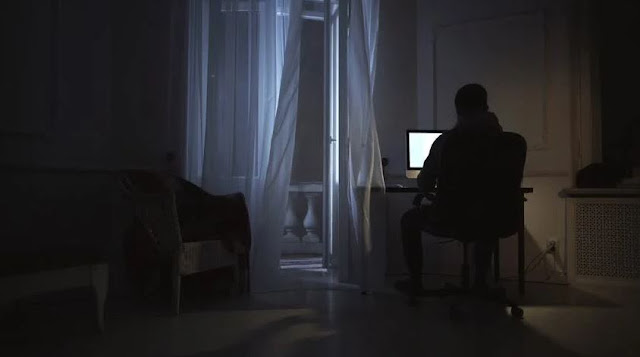
 Writing all alone at night, as your second full time job.

Question: How long would you last at your day job if you only came into work when you felt like it?

Answer: If you're reading this article now because you tried that yesterday, and today you're unemployed, well, there ya go.

A Tidbit of Reality: Nothing involving value — and by value I mean quality of work, reputation, revenue — is done by happenstance. Like... never.

You say, "But B. J., I have to work at my day job, so I don't end up in a cardboard box panhandling on 3rd."

I say, "So true. But what do you do that truly benefits your life when you're NOT at your day job? And those empty-calorie activities like playing video games, watching TV or clubbing doesn't count."

Crickets, gathering around us, say, "Chirping..."

"Right. So what was your question, again?" 

Don't get me wrong. Having a part-time hobby has a huge benefit to a person's quality of life, but if you plan on completing a major project that will be put out into society to augment their quality of life, your reputation and net worth, dabbling at it only when there's a snow storm or when your Aunt Mable loans you her creepy lakeside mansion won't cut it. 

In the former, you end up getting into a snowball fight with your neighbors. They invite you over for drinks post snow flaky fun, and after four Manhattans you slur, "Wad būk?"

In the latter, flies hibernating in the walls come to life as soon as you light the fireplace. They swarm around your head. You run screaming from the mansion, trip over a log, fall into the lake, and drown. Another writer far more serious than your deceased self witnesses your ghostly image, and with focused, steely determination writes a Gothic novel entitled, The Ghost on Missed Chances Lake, that when finished, and published, wins a Pulitzer Prize, and stays on the New York Times Best Seller list for 41,000 straight weeks, making so much dough that the lauded scribe, who isn't you, actually feels sorry for J. K. Rowling.

The time-tested adage, "Your muse finds you working" still tests positive today. 

The fact is, you simply will not write well until you write consistently. 

That 1/4 finished manuscript of yours will never become an actual book until you look at writing as your second full time job. You know, the moonlight gig you willingly take on for no cash and no fame... similar to that security guard job you passed over last year for no real money, far less fame, a skin rash from the uniform, and more income taxes paid... still with no finished book at the end.

If you're serious about becoming a novelist or non-fiction writer, you need to alter your mindset, you know, that psychological aspect of writing I keep harping on, and on, about. Your writing sessions have to be seen as your moonlight job that you willingly take on because you see the Big Picture — the real benefits of finishing that book — personal satisfaction, a gift to society, a lauded career, evergreen income.

You WILL have to sit down and write when,

  • You're too tired.
  • You're not feeling well.
  • When all your friends are going out and having fun, without you.

And that drudgery WILL have to keep on keeping on until you write the words, The End, and not one word before.

You WILL experience, 

  • Loneliness.
  • Frustration.
  • Hopelessness.
  • Mental Exhaustion.

But you WILL keep on, keeping on, until you write the words, The End, and not one word before.

You WILL accept that those feelings come with the job, and no amount of fame, money or multitude of finished books will make those feelings completely go away.

You ask, "So, why am I writing if all I get are those bad feelings?"

I say, "Because you're an artist. You have something to give to humanity. You endure because the personal satisfaction of birthing art and sending it out to the world supersedes all else, all the hard work, exhaustion, and all those lonely times. The work is greater than you. That's why."

Crickets crawl in closer, happily chirping.

HOMEWORK: Tonight, think long and hard about altering your mindset from a hobbyist to a person with a second full time job. Take your brain from happenstance writer to serious wordsmith, from once-in-a-while plot pondering to 24/7 sub-conscious and conscious book rumination. 

This is not only a mindset shift but a style of life change, peeps, and it's forever. You have to visualize yourself being serious with this métier in order to be serious with this métier.

Become steely-eyed. Keep your eyes on that publishing prize. Trade in that juvenile mindset for an adult take on what is really needed to be a professional writer. There is no going halfway in this career. Ask any accomplished writer.


17 June

Welcome Story Critique - Play the Red Pen Game...


There was a movie in the '70s called, Walking Tall, about a sheriff who was a calm law enforcer, who walked his beat with confidence, holding a big old baseball bat. His controlled demeanor, and what he could do with that bat, if pressed, was what kept the townsfolk in line...or holy hell would be paid.

Well, the members of my in-person writers process group call my edit pen, Big Red, along the same lines of that movie — me, as the sheriff, and my pen that big old bat... lol... 

Of course, they know I'm not brutal or scary, but they've come to realize I'm passionate about making their pieces the very best they can be. I already KNOW they're all extremely talented. That has never been in question. The goal with those edits is NOT to demean, but to make their already wonderful works shine.

Where did I get my passion, you ask? From instructors who did the exact same for me.

A writer never learns, never evolves, from their successes. Advancement in one's métier comes from their highlighted mistakes, and through a figurative truckload of them over the years, I've learned to play a mind game with myself — the Red Pen Game.

After a work is finished — drafts, Read Out Loud, betas, rewrites — I ASSUME there ARE mistakes a plenty in that final draft. 

The Game: with the help of an editor, let's see how many we can find and annihilate! It's like a game of Battleship, where the author is unaware of his enemy's location, so the player needs help in finding and firing off those torpedoes to down those errant suckers!

The Key: by ASSUMING my work is flawed right from the start, I've taken the pressure off myself to be perfect to others. And with every flaw found, and corrected, it's like the downing of an enemy battleship, slaying each foe, inevitably advancing my artistic skill. 

I literally LOOK FORWARD to error location in my works from others! No, seriously!

I'm confident in my own skill as a wordsmith, but I know I am nowhere near perfect, and I need others to uncover what I myself cannot see, now, and for the rest of my artistic life.

Fear of Critique stems from a writer having little self-confidence in their own skill — again, the psychological. Are you getting now why I say writing is 90%  a mind game?

  • New writers shouldn't be self-conscious about their ability. 
  • New writers should feel empowered by their passion and eager to become a learning sponge, soaking up as much knowledge as possible about the literary arts, from every mentor who comes their way.

As long as the red pen critiques are,

  • specific to a certain flaw  - story development, line/style consistency, proofing
  • not a sweeping criticism or a blatant attack in terms of taste, or co-writer jealousy

Then welcome them with open arms, smile at their happenstance, rewrite, and learn to not make the same mistake again.

And above all, ask WHY? 

You need to know why a sentence or scene doesn't work to know why being delivered a different way does, so that you can internalize that error, and never make the same mistake again. 

Warning: If you gloss over these edits, you're not internalizing the errors, and you WILL be as a serial killer, and continue to maim your works in the same way, over and over again.

The Result: once you look at edits as a game and treat them in the right way, you will never be afraid to have your works thoroughly Red Penned. And that result, right there, will have you,

  • fearing the process less
  • wanting to write more
  • making less excuses not to write.

Your STOP Not Writing dragon greatly slayed...