Showing posts with label Writer Exhaustion. Show all posts

11 January

Writing Through Exhaustion...


Short Story: You have to do it.

Long Story: Finding a way to do it.

You're healthy, you're fit, and you've had sleep, and you look at the clock, and know it's time for your writing session.

But you feel the gravity around your body at approximately 628%, and the acuity of your mind is lower than the Archie comic character, Moose's, on his worst day.

You have prison pallor, bags under your eyes, and a weird scent is coming from your hoodie. (Okay, this all could just be me.)

You have writing deadlines that are threatening not to be met if you do not do what readers expect you to do, and that is to hunker down, put that 4th cup of coffee to the side, and get creating.

(Feel free to laugh now at the layman's romantic version of being a full-time writer. Crikey, I don't even own a cravat.)

Yes. Mental exhaustion can overtake. 99% of the time it's due to stress. And that stress can be the 7th circle of hell if you don't find a way to break the cycle...


No writing > More worrying > Less sleep > More exhaustion > No writing.

You get the drift.

How do you break that cycle? You write through the exhaustion.


You write regardless > Your self-image soars with pride that you managed to plunk those keys, however bull-in-a-china-shop ungraceful the act may have been > You're more tired for that mental effort come bedtime > The worrying about not writing disappears > You collapse into a contented coma > You wake up, exhaustion and guilt free > You happily write again.

In order to break this nightmarish cycle, you have to allow yourself to have a bloody awful writing day when you pound those keys on the projects that need doing — regardless of how you feel or how well you're writing.

~ Basically, it's nature's way of punishing you for ending up in that negative cycle in the first place. Way. To Go. ~

You've heard how the best way to write every day is to write every day, trying everything you can to NOT break that self-fulfilling cycle.

But life can get in the way — sickness, holidays, emergencies — where your good habit breaks, and you fall for the umpteenth time, head long, into the No Writing Fatigue abyss.
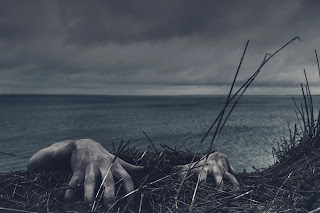
At some point, you must come to terms with the fact that you screwed up. You know you need to stop the negative cycle, cold turkey, and grab a hold of the ledge and claw your way back up to where the good cycle resides.


Just like with any bad habit, stopping cold turkey hurts, and hurts bad. The Horror...


Suck it up. Suffer through that exhausted writing day. Then go to sleep later that night assured that the next day, you'll be back on track — no exhaustion, much self-confidence, and renewed excitement about writing consistently again.

Fact: No matter how many years or how many works you've produced, this fall from grace can and will happen. Veteran writers aren't any more immune to the negative cycle than you. If they say they have no problems writing every day, they are lying. Life happens, even to the blue-blood blessed. Take some evil comfort in that. I surely do.

~~~

Today, I look, and feel, like crap. Thanks a lot, you Christmas cheer.

Today, I will write. And it will be painful. (help...me...)

I will take a shower afterwards to wash off any residual crappy feeling. (Be gone with you, oh, Mr. Crapoid!)

And tonight, I will collapse into bed, and I will sleep the sleep of the contented, rather proud of myself. (Hey, stop snickering... we writers barely have a life. We have to grab imagined good stuff where we conjure it.)

~~~

Okay now, it's your turn, oh, exhausted word hound. TAG!



09 June

Writer Fatique - From Stress, Fear, or is it Real?


It happens to all writers...that all-encompassing exhaustion...

It can happen after an especially hectic work week, where severe focus was needed on deadline pieces.

Or it can sneak up on you when you least expect it.

But how can you tell if it's real or emotionally driven?

I will bleed out before I'll miss a deadline, so for me the constant war against body stress is real, and it will often mask as severe fatigue. It's my psyche's need to check out from reality for a while to lower the stress, which is not conducive to meeting the new deadlines before me.

I've also sensed a weariness if I'm facing a new book project, but I know there's a distinct possibility it's solely from Fear of the Unknown. You'd think after writing six books, I'd be past this mind game, but here's the kicker, my fellow furry scribes: a writer is never past this mind game. All an experienced writer can do is better judge the type and degree of exhaustion they are experiencing.

Here's what I do to gauge if it's Stress or Fear or Real:

When I'm about to close the laptop and take a nap because I think I can't plunk down another word, I set a 15-minute timer, and keep writing on anything for those 15 minutes. If after the timer goes off, and I'm in a writer flow, not wanting to quit, I know it was from the Fear of the Unknown, aka Writer Stage Fright, and I continue to write on.

If during those 15 minutes, every word typed, although each is a good choice, is like trudging through Flanders Field mud, then I know it's from Stress, of working too long under too many deadlines. The Solution: I'll take a short walk outside to reinvigorate my mind and body or take a cat nap to see if, afterwards, I'm refreshed enough to continue writing for the day. 90% of the time, that break will help, and I'll finish the work day.

If during those 15 minutes writing, my brain simply cannot come up with the right words like it normally would, then I know it's exhausted for real, and I need to wave the white flag for the day and rest, as an investment for a more productive tomorrow, and to ward off Burn Out, a very real writer disability that can take far longer from which to recover. A full time writer must avoid Burn Out at all costs.

There is a fourth option, too, and that can be hunger and/or thirst. And I do NOT mean the empty calorie snacks you slovenly gobble at your desk. 

To discover if your body is lacking nutrients, take the Two-Step Challenge:

First, try drinking a full glass of water, and after a short break, try again to write. If you feel more alert, your body was likely dehydrated. 

If the water didn't work, 

Second, ask yourself when you last ate a decent meal. 

Did you miss breakfast? Eating a decent amount of protein to rev up your day.

Did a writing session go overtime, and you forgot to eat lunch? 

Did you have a decent dinner last night? (And by decent, I mean fresh vegetables, a small portion of lean meat and maybe fresh fruit for dessert.) 

If food is the issue, after you break for a meal, your mind focus will reignite very quickly, or that's been my experience. The same with water, if you're dehydrated. 

Note: feeling hungry is often just a sign you're dehydrated, so instead of automatically ingesting calories, try first drinking water.

A full time writer has to gauge carefully the symptom of exhaustion and respond accordingly. If you do this, over time, you'll experience fewer bouts of debilitating fatigue, as you'll learn to recognize the symptom, quickly gauge its cause, and course-correct before it hinders your work day.

Writing is a psychological endeavor, yes, but it's also a very physical activity, too, even if your body is merely sitting down. It takes a lot of mind/body juice to work with words. If you don't heed the fatigue, and know how to treat it, that book you want to finish, no matter your skill, simply won't get done.