I swear…
So-called online experts want to scare the poo-poo out of new writers with their pressure-mounted one-liners, like, “Your first sentence, your first page, must be stellar!”
A new writer reads this, and thinks, Man, the last thing I ever did that was stellar was accidentally fly my HUUUUGE dragon kite near an airport, and get a fine for messing with incoming jet traffic. (Okay, this maybe a true story, and may not be your story. I’m saying no more…)
The last thing a struggling writer needs to read are words like the above, which passive-aggressively hint at, “Write perfectly, you heathen hack, or you’ll be forever tarred and feathered by all in the literary universe!”
The ONE thing I’ve learned about the literary world is there exists queer ducks in it who, in the act of attempting to help new writers, achieve the exact opposite.
Fact No.1: EVERY DRAFT OF EVERY STORY EVER WRITTEN IN CRAP.
I don’t care if you’re Joe Nobody or Ernest Hemingway.
I don’t care if you’re invisible on social media or are an influencer from hell.
I don’t even care if this is your first time at the literary bat, or you own the damn bat.
YOU WILL WRITE DRAFT CRAP. ACCEPT IT. EMBRACE IT. LIVE IT.
Soooo…
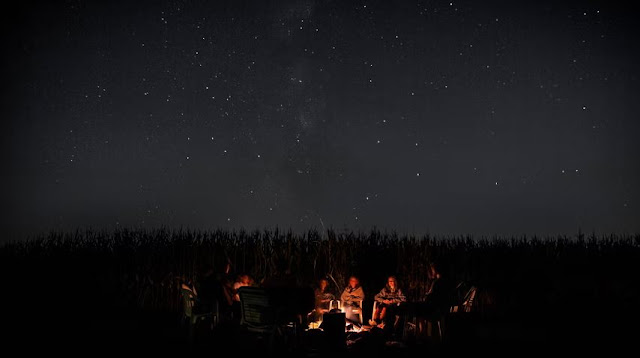
Instead of obsessing about creating that so-called perfect first line or perfect first page that’ll get you a book contract with a zillion dollar advance, plunk your creative mind down in front of that figurative campfire over there, and tell those campfire listeners a story. An honest to goodness story.
Don’t obsess about word choice.
Don’t try to shock and awe.
Begin your tale like you would if your friends were gathered around you, eager to hear your wondrous flight of fancy.
Sit down, and start plunking out the words that fit with the starting scene you visualize in your mind’s eye: Where are we? Who is there? What’s happening? Who is saying what to whom?
Chances are that what you’ve seen will end up typing out just right without you obsessing over anything. Either way, plunk it out, and leave it alone. It’ll ferment behind the scenes as you continue writing the story.
Your first line, first page, “perfectness” (hey, I’m a word weaver. I can make up words if I wanna) can come later in the edit and Read Out Loud phases. Right now, it’s all about your tale and how you are seeing it unfold, and nothing else.
Don’t let first line, first page article writers intimidate you into not writing at all.
Instead, wonder how many rewrites they undertook in drafting that article.
And wonder how supremely crapola-filled that initial draft was.
A HINT: if you’re having problems typing out the words, leave the laptop, and say the story out loud to yourself while recording it on your device. Replay it, and see what words you used, and type those down as a start,
THE KEY: When that first page is filled, LEAVE IT ALONE. Continue writing your story to The End, and then after you've let the finished story breathe for a couple of weeks, return to that first line, first page, and edit. Chances are now that the whole story is written, you’ll have a much better grasp of how to perfect that line and that page, obsession-free, stress-free.
HOMEWORK: If you’re first line, first page obsessing right now, STOP it, DROP it, and type on.
You need to write this tale to The End. Without reaching The End, that first line, first page perfection is moot.
Type on......